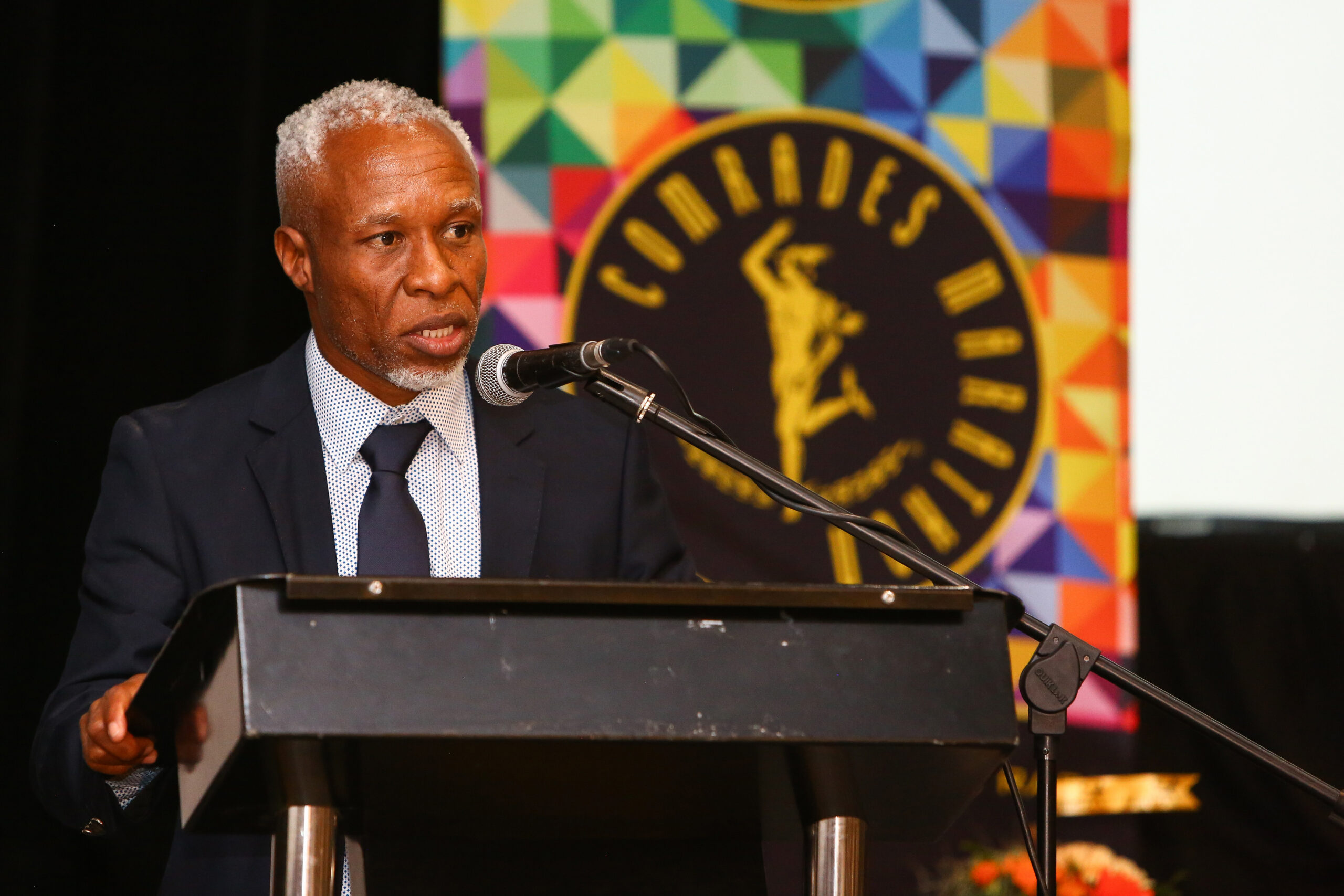
A record field is expected to race the 100th edition of the Comrades Marathon between Pietermaritzburg and Durban next year with former chair and current board member, Mqondisi Ngcobo excited about prospects for this special edition of the great ultra-marathon.
Ngobo, who came onto the Comrades Marathon Association (CMA) board in 2016 as an ordinary member before serving as vice chair to Cheryl Winn between 2018 and 2021, completed his 8th Comrades this year in his best ever time for the up-run of 7 hrs 56 min.
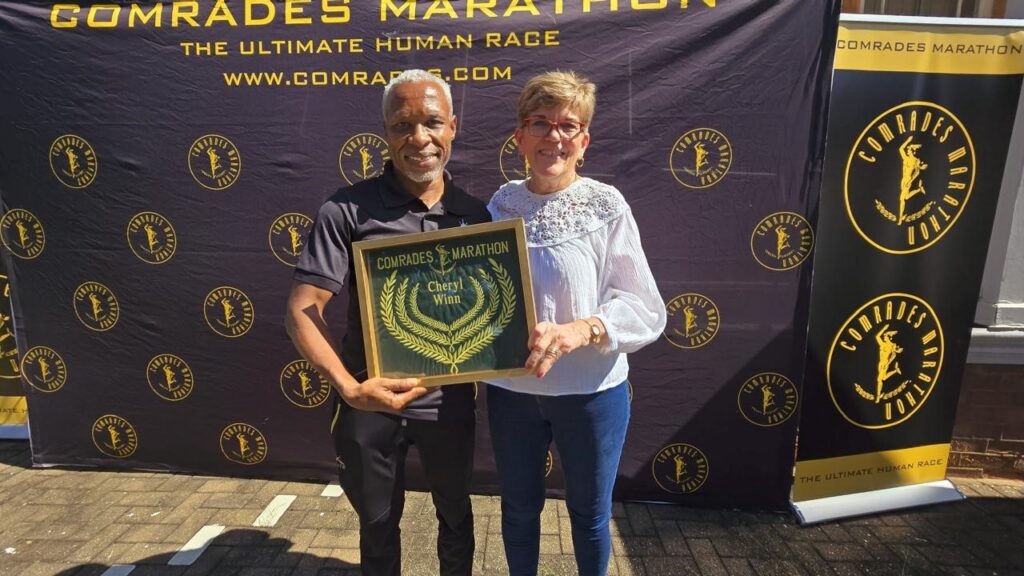
Having served an ‘apprenticeship’ under the dynamic leadership of Winn, Ngcobo took over as chair, where he served till last year. He is currently completing his final year on the board and spoke to SPNAfrica on this year’s race as well as looking ahead to 2027.
Will he be standing again for the board in the centenary year of the event?
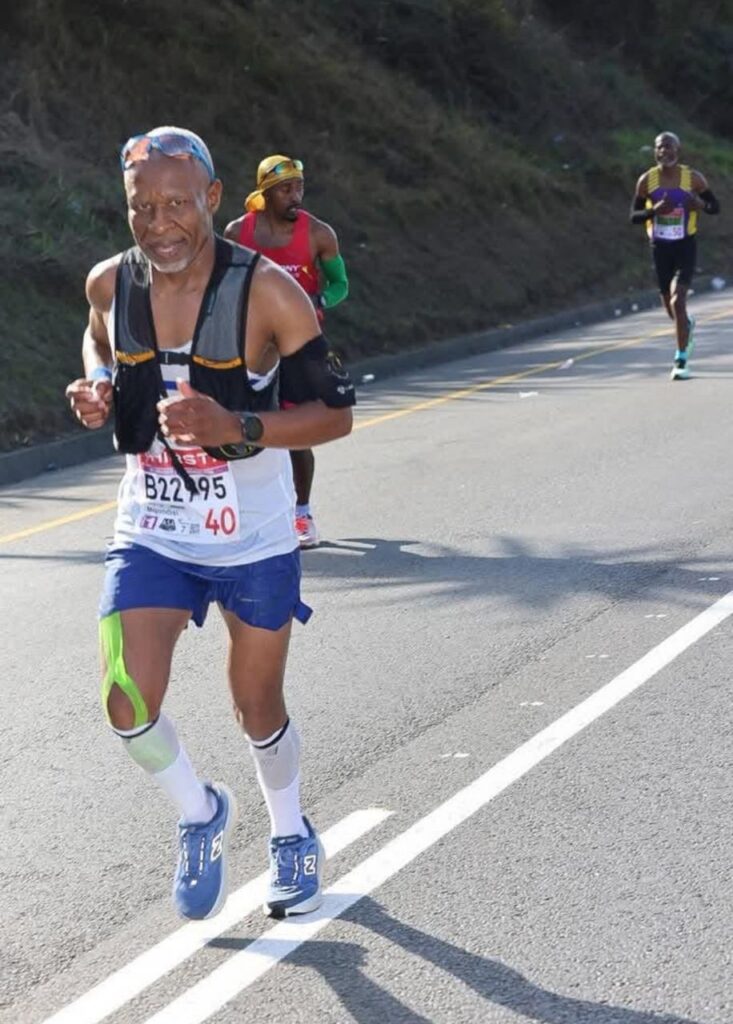
“I haven’t made up my mind about standing again,” Ngobo admitted. “Sometimes it is good to take baton and hand it over, as Cheryl (Winn) did before me.
“Comrades has stablised nicely and is in a very good place now. The current leadership is doing well and everyone is pulling their weight. Comrades is returning to where it used to be – the greatest ultra in the world.
“We have some young blood and a good diversity of skills on our board, with experience from people such as Barry Holland, Willie Mtolo and Rory Steyn”.
What were some of the high points of this year’s race?
“A big highlight for me was the three-batch start, which we implemented for the first time. This levelled the playing field for the back runners as the cut-off points were based on the last group to start.
“It used to take up to 12 minutes for the back markers to cross the start line. Now it was only 5-6 min across the line. I must admit that I was a traditionalist favouring just one group at the start as we always had in the past, but I’ve seen the benefits of the new system, so have changed my mind!
“The success of the three-batch system contributed to the high finishing rate. We had 22 000 entries, 20 000 starters and over 19 000 finishers, which is one of the highest percentages of finishers ever.
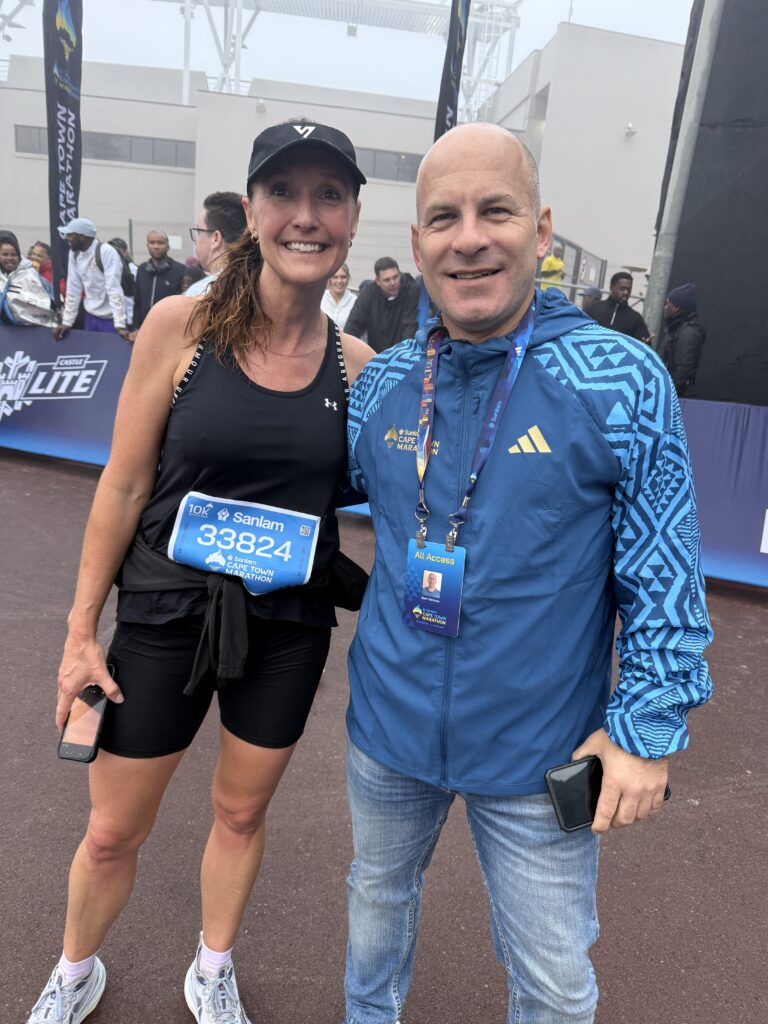
“A second highlight was the exceptional effort from our race director, Sue Forge, in introducing changes at the finish at Scottville. It was the best in years in terms of traffic management. There are often traffic challenges but this year there was virtually no congestion and a free flow of athletes. I salute Sue and her team for that!
“A third highlight was the overall organisation along the route. There were scarcely any issues apart from running out of water at one point, where the team were swift to respond and arrange for more water to be delivered. And there were thankfully no cut-off issues this year.”
In a race as vast and complex as Comrades, there are inevitably challenges on the day. What were some of the areas of difficulty to which the team had to respond this year?
“There are always challenges in the build up to the race but I think we managed those very well. The issue of the live broadcast proved challenging and there was a lot of uncertainty in that respect. It was perhaps not of the best quality, but the fact that it was broadcast on SABC ensured most South Africans were able to watch the race for the first time in several years.
“And the introduction of the YouTube channel was well received and will form a big part of the preparation for next year’s centenary event.”
Comrades is known as one of the biggest spectator-events in South Africa with hundreds of thousands turning out along the 90km route year on year. How was spectator ‘gees’ this year?
“The spectators were quite impressive once again,” Ngcobo related. “The only deterrent which impacted negatively was the road works between Cato Ridge and Pietermartizburg which limited access to the route. We will be working closely with traffic authorities to ensure best possible access for spectators for next year’s centenary.”
Next year’s 100th Comrades Marathon provides a significant opportunity to reach out to the world and bring on board new partners and stakeholders. Can you give an idea of some of the exciting developments planned for the occasion?
“We have put together an ad hoc committee, led by board members Barry Holland and Rory Steyn, who will be bringing proposals for various innovations and ancillary events to the board. These will be announced at or after the launch of the centenary race later this year.”
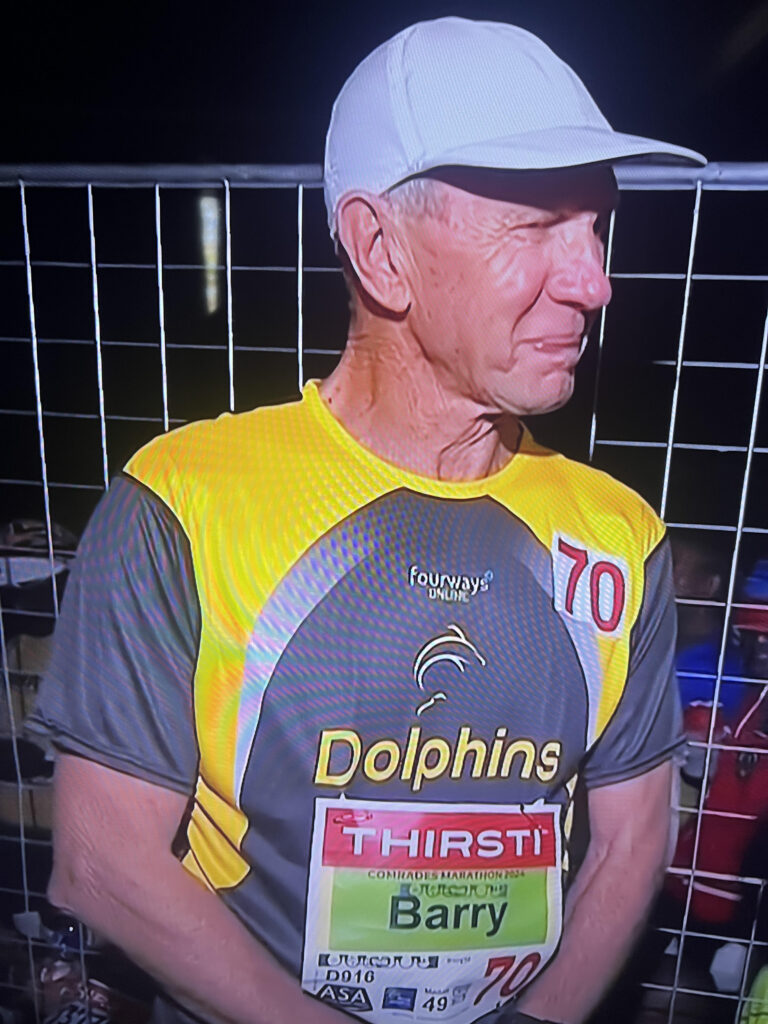
Holland is a Comrades legend. With 49 Comrades Marathons under his belt, his quest for a unique 50 has been thwarted by a COVID-related illness but he has turned his passion for running the Comrades into playing a major role in ensuring its legacy, particularly for next year’s centenary.
“Details of our proposals will be revealed at the launch of our hundredth edition next month,” Holland told SPNAfrica. “Rory heads the group, which we’ve called V427 or Vision for ’27, and our vice-chair Nontuthuko Mashimane and I are working closely with him. Comrades stalwarts Bruce Fordyce and Norrie Williamson complete the group, adding valuable depth of experience and insight.
“Our aim for next year is that Comrades should be delivered at a very high level. We were delighted that this year’s event under the directorship of Sue Forge was exceptional – we had glowing reports – and we want to build on that and deliver an even better race next year.
“We aim to introduce unique ideas to take Comrades to a new level by extending our outreach to include the runners’ families. We plan to launch something very exciting, never been done before, targeting the wider family and exposing them to the Comrades magic.
“As access onto route has become increasingly challenging, we are aiming to take people off the course and bring them to the finish line for an ultimate experience of Comrades.”
Holland admitted that the demand for entries next year is expected to substantially exceed capacity. While not divulging the number of runners which the CMA plans to admit to the race next year, there is a strong probability that the record field of 22 000, which raced in the millenium year, will be exceeded, possibly by as much as 30%, ensuring Comrades maintains its status as the world’s biggest ultra-marathon.
“But we want to dispel the urban myth, which has been created in social media, that no novices will be allowed to run next year – that is absolute rubbish. Our number one priority is safety, so we need to plan to take on the biggest field without compromising that principle.
“This year’s Comrades sold out in less than ten hours, which impacted negatively on some parts of the world,” Holland admitted. “We will not make that mistake again and will stagger the ballot releases to give everyone a fair chance to enter.
“We have an exciting idea from Bruce and Norrie involving international runners and are working hard to make that happen.”
Holland reflected that the hundredth edition will be looking for ways to celebrate Comrades legends, both those living and who have passed on. “We plan to include something very special for our living legends such as Dennis Tabakin, Witsie vd Westhuizen and Louis Massyn.
“We also want to return to our roots and honour those returnees from the First World War who founded the race, people such as Victor Clapham. Often those stories get lost in the mist of times, but we are planning to celebrate and communicate our rich heritage as boldly as possible.”
Ngcobo echoed Holland’s cautions about the size of the field. “There will definitely be a cap on numbers for reasons of runner safety, race experience and logistics,” the former Comrades chair stressed. “We will likely keep the three-batch start to ease some of the congestion around Pollys Shorts.
“Durban is much bigger than Pietermartizburg and so in terms of traffic flow and infrastructure we can accommodate increased numbers. Sue (Forge) will be leading a team to plan traffic and runner flow at the finish in conjunction with the road authorities to see what is possible in respect of numbers.”
It would appear that Comrades has done its best to raise governance practices to new levels, with the current board committed to best practice in this regard.
“No member of the board is operational,” Ngcobo concluded. “Our Race Director has full reign in operational matters and reports to Alain Dalais our GM who is accountable to the board. This year went very well and the teamwork between the Race Director and GM was excellent.”